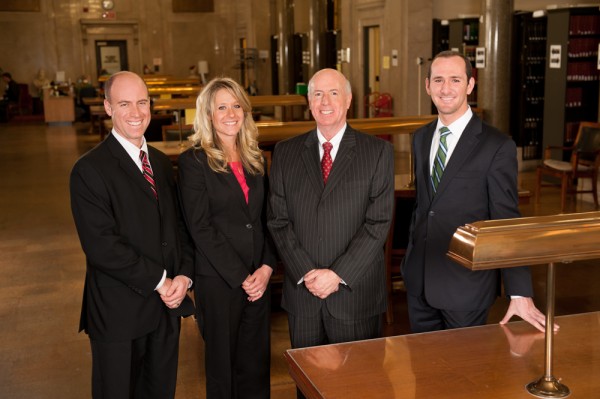
Schuh & Goldberg, LLP is a full service financial services firm providing numerous bankruptcy, insolvency, and work-out services to both creditors and debtors.. These can be divided into the following general categories:
Creditor Representations in Business Bankruptcies
Schuh & Goldberg, LLP has handled the representation of creditor interests in bankruptcy cases both big and small. John A. Schuh has acted as the bankruptcy consultant to the City of Cincinnati in two large hotel bankruptcies (In re HRC Joint Venture, 187 B.R. 202) and has handled the collection of a large unpaid tax claim for the City of White Plains, New York in the Ch. 11 Reorganization of Federated Department Stores. John A. Schuh recently overturned lower court decisions and won a decision at the 6th Circuit Ct. of Appeals entitling the city to recover in excess of $1,000,000.00 in taxes. A settlement offer of $500,000.00 was rejected as the parties awaited a ruling which ultimately yielded the client $1,000,000.00.
As an example of the tools that are in our bag, we have converted unsecured claims to secured or administrative claims through reclamation demands. This issue is commercial in nature and is available to a seller of goods to a buyer who files for bankruptcy relief.
UCC Article 2-702 (Ohio Rev. Code sec. 1302.76) is a “Seller’s remedies on discovery of buyer’s insolvency”. It gives a seller of goods a 10 day right to reclaim goods sold on credit upon written demand to the debtor. The 10 days runs from the date that the goods were delivered to the debtor.
Once the reclamation demand has been given, the debtor must grant the creditor an administrative expense claim pursuant to sec. 503(b) of the Bankruptcy Code or a lien on the product, all as is contemplated by 11 U.S.C. sec. 546(c)(2). A. reclamation demand can convert an otherwise unsecured claim into a secured or administrative claim for any goods delivered to the debtor within the 10 day period.
Reclamation demands are just one small example of how our expertise can maximize recovery to you when there is an unexpected bankruptcy of one of your customers. We think and react very quickly.
Business Insolvency, Workouts and Ch. 11 Reorganizations
Schuh & Goldberg, LLP is available to consult with businesses under financial distress. It is not always necessary to file a bankruptcy case to facilitate business reorganization. We can come up with creative ways to avoid it using liquidation analysis, friendly foreclosures, and a common sense approach. For example, in an out-of-bankruptcy workout situation, we can approach your creditors and can demonstrate to them with a full disclosure of your situation that they would receive a certain sum in a bankruptcy proceeding but that you are willing to pay something more than that in order to avoid the internal turmoil associated with the bankruptcy process.
We bring something to the table that not many others can – credibility. When Schuh & Goldberg, LLP delivers the message, the legal community knows that it’s the straight scoop.
Our reputation is our greatest asset!
If you’d like to discuss a 203 North LaSalle valuation, the status of the new-value exception to the absolute priority rule in the 6th Circuit, or the finer points of any Ch. 11 Reorganization, call John A. Schuh.
John completed a very challenging Ch. 11 case for Northern Kentucky Professional Baseball, LLC (The Florence Freedom), a minor league baseball team playing in the Independent Frontier League. In less than 120 days, John was able to effectuate a sec. 363 sale of the team’s assets and confirm a liquidating plan under Ch. 11 that enabled the team to play minor league baseball in the 2005 season. There were multiple newspaper articles written about the case.
The market melt-downs and credit crisis permeating the country’s financial systems have placed John’s services in great demand by banks and financial institutions dealing with troubled loans as well as by bank customers who are being faced with banks and financial institutions unexpectedly reducing lines of credit or declaring loans in default by reference to breach of loan covenants in some cases where the business bank customer has never missed a payment.
Schuh & Goldberg, LLP can be tough and litigious if you want us to be but we believe that a more reasoned approach to work-outs starts with a view that when a business loan is in default, the business bank customer and the bank are not enemies, but rather are partners, both with a real and vested interest in seeing the debtor through distressed times.
Collections, Real Estate Foreclosure and Related Debtor/Creditor Services
Schuh & Goldberg, LLP can give you a fee quote on a fixed fee basis, contingent fee basis for collection services including civil suits to recover money judgment, certification of judgment liens, certification of foreign judgments to the State of Ohio, wage garnishment, bank attachments, live executions, judgment debtor examinations, real estate foreclosures, etc. Call (513) 321-2662 for a quote or email us.
Debtor Representations in Ch. 7 Bankruptcies
We are a debt relief agency. We help people file for bankruptcy relief under the Bankruptcy Code.
Debtor Representations in Ch. 13 Bankruptcies
On 10/17/2005 Congress passed the Bankruptcy Abuse Prevention and Consumer Protection Act of 2005. This new law made some very dramatic changes in the law including a definition for a “debt relief agency” that may be applicable to attorneys. If in fact this definition applies to attorneys then we are required to make this disclosure:
We are a debt relief agency. We help people file for bankruptcy relief under the Bankruptcy Code.
Because there are many persons caught in the mathematics of the mean’s test, some debtors are forced to file a Ch. 13 bankruptcy case as opposed to a Ch. 7. There also can be some reasons why someone would elect to file a Chapter 13 over a Chapter 7, such as to reinstate a residential mortgage loan that is in default under circumstances where the borrower wishes to keep the homestead.
Chapter 13 cases are debt repayment plans under which some portion of a person’s debts are paid back to their creditors over a 3 to 5 year period of time through a Ch. 13 Trustee. The amount that must be repaid is a factor of how much disposable income the debtor (“assisted person” in the jargon of BAPCPA) has as well as a calculation of non-exempt equity that a person has in their assets.
Essentially what happens is that a budget is prepared where the necessaries of a person’s life are paid first and their disposable income is thereafter used to fund the repayment plan. Call for a free consultation and we can explain your options in more detail and help answer difficult questions in confidence.